



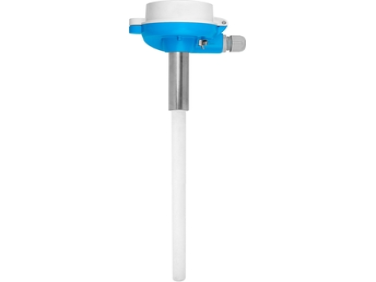
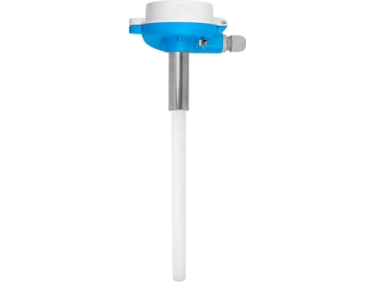
Endress+Hauser iTHERM FlameLine TAF11 High-Temperature Thermometer

007112-HW-ENDRESS-012
Overview
These specialized high-temperature thermometers are engineered for extreme industrial environments where conventional temperature sensors cannot operate reliably. Equipped with ceramic thermowells and platinum–rhodium thermocouples, they ensure precise measurement even in processes involving aggressive media or very high thermal loads. The robust thermowell acts as a durable shield against mechanical stress, corrosion, and chemical attack, significantly extending sensor lifespan while safeguarding process integrity.
Measuring principle
Thermocouple
Characteristic / Application
metric style
modular temperature assembly
high temperature probe (furnace)
incl. single ceramic thermowell
Thermowell / protection tube
ceramic protection tube
Insert / probe
ceramic capilarry, rigid
Outer diameter protection tube / Insert
14,0 mm (0,55")
16,0 mm (0,59")
17,0 mm (0,68")
22,0 mm (0,87")
24,0 mm (0,94")
26,6 mm (1,05")
Max. immersion length on request
up to 4.000,00 mm (157,48'')
Material protection tube/ thermowell
Ceramic (C610)
silicon nitride ceramic (SiN)
sintered silicon carbide (SiC)
Process connection
compression fitting:
G3/4"
G1"
G11/2"
adjustable Flange
Tip shape
straight
Operating temperature range
Type K:
-40 °C ...1.300 °C
(-40 °F ...2.372 °F)
Type J:
-40 °C ...750 °C
(-40 °F ...1.382 °F)
Type N:
-40 °C ...1.150 °C
(-40 °F ...2102 °F)
Type S:
0 °C ...1.600 °C
(32 °F ...2.912 °F)
Type R:
0 °C ...1.600 °C
(32 °F ...2.912 °F)
Type B:
600 °C ...1.600 °C
(1.112 °F ...2.912 °F)
Max. process pressure (static)
at 20 °C: 1 bar (15 psi)
Accuracy
class 2 acc. to IEC 60584
Integration head transmitter
yes (4 … 20 mA; HART; PROFIBUS PA; FOUNDATION FIELDBUS)
Certification
SIL (transmitter only)
Designed for demanding applications, these thermometers offer long-term stability, extended operational life, and optimized maintenance costs. The use of non-porous, wear-resistant thermowell materials ensures reliable sensor protection and consistent measurement accuracy. A modular design allows flexible configuration and easy replacement of spare parts, reducing downtime and lowering lifecycle costs. With improved durability and high-precision performance, these instruments enhance product quality and contribute to safer, more efficient plant operations.